“A revelation by Jesus Christ, which God gave him, to show his slaves the things that must shortly take place.”
-Revelation 1:1
Chapters Menu
Related videos, articles
Revelation – What does it mean?
There Will Be No Delay Any Longer
The Voices of the Seven Thunders
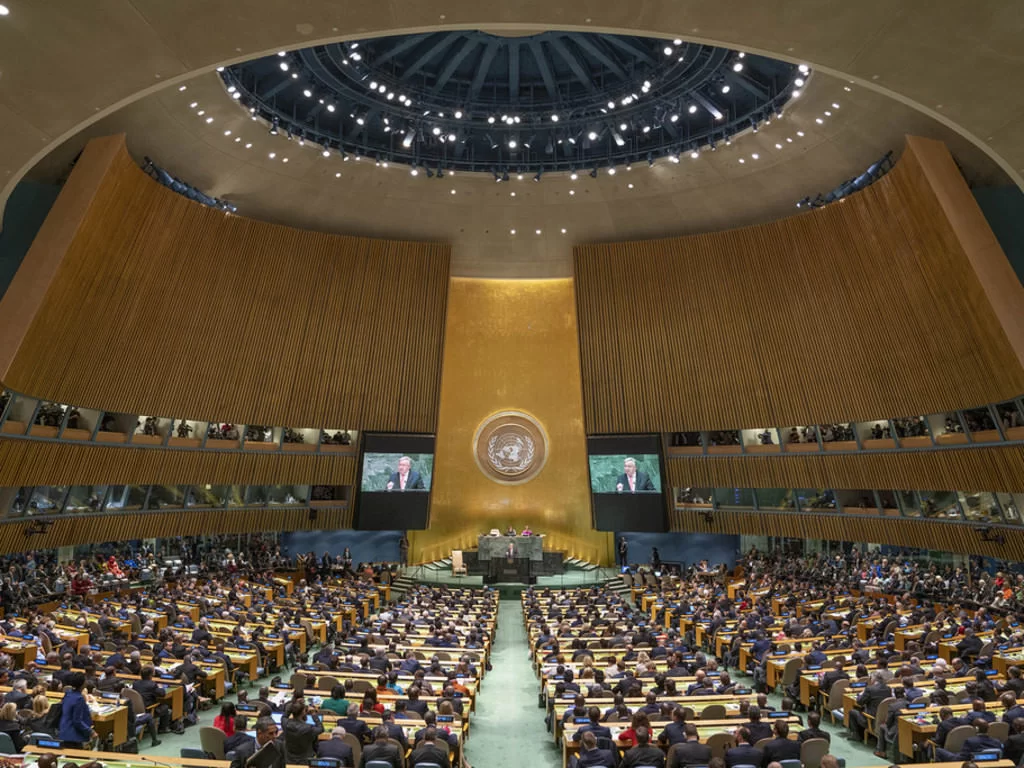
The United Nations and Babylon the Great
Share This Chapter
SIDE NOTES
The Watchtower’s most patently absurd interpretation of Revelation concerns the 666 mark of the beast. Not only does the WT teach that people began receiving the mark of the beast in 1922, but the Grand Climax commentary (Paragraph 4)makes the absolutely preposterous claim that persons who have received the mark and who, as a consequence, do not have their names written in God’s book of life, can still, somehow, repent and receive salvation. What then is the point of the mark in the first place?
The same paragraph states that those who do not receive the mark of the beast have already been prevented from buying or selling. This is, of course…what’s the word? Twaddle.
Meanwhile, the so-called Great Reset, a euphemism for crashing the global financial system and implementing a Central Bank Digital Currency, is moving forward. Cryptocurrency has conditioned everyone to accept the concept of digital money. The International Bank of Settlements, the central bank’s central bank, has already developed a digital currency.
This digital system can become “programmable money,” and along with mandatory digital IDs, this means everyone can be monitored, and if a person does not comply with the issuer’s demands, their “money” can be turned off — effectively preventing one from buying or selling, exactly as is foretold in Revelation.
The opening words of Revelation locate the events revealed as taking place during “the Lord’s day.” That is why John states, “by inspiration I came to be in the Lord’s day.” As presented in previous chapters, the Lord’s day is the future manifestation, or revelation of Jesus, as Paul indicated when he wrote: “While you are eagerly waiting for the revelation of our Lord Jesus Christ. He will also make you firm to the end, that you may be open to no accusation in the day of our Lord Jesus Christ. God is faithful, by whom you were called into a sharing with his Son Jesus Christ our Lord.” (I Corinthians 1:7-9)
The dramatic unsealing of each of the seven seals of the sacred scroll of Revelation sets into motion irreversible events associated with Christ receiving his glorious Kingdom crown. The opening of the first four seals unleashes the so-called four horsemen of the Apocalypse, plunging the world into war, pestilence, and famine. As has been established in this publication, these are future events. This is especially evident in connection with the opening of the sixth seal, which depicts the symbolic heavenly luminaries being snuffed out, a symbolism Jesus also employed to describe the earth-shaking events associated with what the Lord called a great tribulation, unlike any calamity that has ever occurred or ever will occur. Since the great tribulation has not begun yet, what about the opening of the final seal—the seventh seal? What might those apocalyptic symbolisms betoken?
The opening of the last seal occurs after the sealing of the remaining 144,000 is completed. Revelation 8:1-4 reads: “And when he opened the seventh seal, a silence occurred in heaven for about a half hour. And I saw the seven angels that stand before God, and seven trumpets were given them. And another angel arrived and stood at the altar, having a golden incense vessel; and a large quantity of incense was given him to offer it with the prayers of all the holy ones upon the golden altar that was before the throne. And the smoke of the incense ascended from the hand of the angel with the prayers of the holy ones before God.”
It seems appropriate that after the final sealing is accomplished, which is apparently why the great tribulation will be cut short—shortened by God for the sake of the chosen ones—as Jesus foretold, and symbolized in Revelation by the four angels holding back the winds of destruction even after the point when the metaphoric heavens have gone dark and the institutional mountains of the world have all crashed. The thankful prayers of the then-sealed holy ones should ascend like perfumed incense before God.
The Watchtower, however, teaches that the seventh seal was unsealed in 1919 or around that time. The Grand Climax commentary on Revelation quotes from a Watchtower published in 1919 that comments:
‘“We believe it is now a true saying that the harvest of the kingdom class is an accomplished fact, that all such are duly sealed and that the door is closed.’ During this difficult period, the fervent prayers of the John class were ascending, as though in the smoke of a large quantity of incense. And their prayers were being heard!”
But since the sealing is scheduled to occur some time before the opening of the seventh seal and after the symbolic stars have fallen from heaven, and after the sun and moon have ceased to shine, and after every mountain and island has been moved from its place, it is manifestly not true that the sealing was accomplished in 1919. Neither was the door closed back then, nor has it been at any time since.
DO NOT HARM THE EARTH, SEA, OR TREES
After the opening of the sixth seal, the vision depicts four angels standing upon the four corners of the earth, holding tight the four winds of destruction. And the angels are commanded: “Do not harm the earth or the sea or the trees, until after we have sealed the slaves of our God in their foreheads.”
Next, though, after the sealing takes place, the seventh and final seal is broken, and the blowing of the first trumpet initiates the destruction of a substantial portion of the earth, sea, and trees. Hence, we read: “And the first one blew his trumpet. And there occurred a hail and fire mingled with blood, and it was hurled to the earth; and a third of the earth was burned up, and a third of the trees was burned up, and all the green vegetation was burned up.” (Revelation 8:7)
Prior to the unsealing of the last seal, the angels had been commanded not to harm the earth, sea, or trees until the sealing had been accomplished. But the judgments contained in the seventh seal are to be executed against the earth, sea and trees. What do these symbols represent? A significant clue may be found in the last verse of the eighth chapter of Revelation, which reads: “Woe, woe, woe to those dwelling on the earth because of the rest of the trumpet blasts of the three angels who are about to blow their trumpets!”
In view of the fact that the “rest of the trumpet blasts”—specifically the fifth, sixth and seventh trumpets—result in “woe, woe, woe to those dwelling on the earth”—three woes associated with the last three trumpet blasts—the question arises: why do not the first four trumpets similarly result in woe for the peoples of the earth? The answer is: The first four judgments heralded by the angelic trumpeters are not directed against the “peoples dwelling on the earth”—that is to say, those who are not recognized as being in association with God’s earthly organization. The first four trumpets herald God’s judgments upon his organization. That is in harmony with the axiom that the judgment starts with the house of God.
This is also discernible by reason of the fact that both the accomplished sealing of the Israel of God and the gathering of the great crowd who are destined to “come out of the great tribulation” are presented in context as taking place immediately before the opening of the seventh seal. At that point, before the opening of the seventh seal, the door to salvation is officially closed. Everyone who is going to inherit salvation is either a sealed spiritual Israelite or part of the great crowd. At that point, there will no longer be any need for an earthly organization to guide, train, and exhort God’s people. As the Jewish system of things became obsolete after it accomplished its intended purpose of producing the Messiah, so too, the Watchtower will become dispensable.
In order to better appreciate why God would destroy what up until then had served as his earthly instrumentality, consider what the Hebrew prophecy of Zechariah says. Zechariah 13:7 reads: “‘O sword, awake against my shepherd, against the man who is my companion,’ declares Jehovah of armies. ‘Strike the shepherd, and let the flock be scattered; and I will turn my hand against those who are insignificant.”’
What is the connection to the blowing of the first trumpet?
This aspect of Zechariah was initially fulfilled when the shepherd, Jesus, was struck by the executioner’s sword and the apostles were all momentarily scattered. Nevertheless, the prophecy has an application to God’s judgments during the Lord’s day. That should be plainly evident by the context of the following 14th chapter of Zechariah, which describes Armageddon as immediately subsequent to the scattering of the flock. To what degree is the flock scattered? Jehovah answers at Zechariah 13:8-9, saying: “‘And in all the land,’ declares Jehovah, ‘two parts in it will be cut off and perish; and the third part will be left remaining in it. And I will bring the third part through the fire; and I will refine them as silver is refined, and test them as gold is tested. They will call on my name, and I will answer them. I will say, ‘They are my people,’ and they will say, ‘Jehovah is our God.’”
To re-emphasize a very important point: Zechariah’s prophecy was written after the Jews had returned from exile in Babylon. It is apparent, then, that the destruction of Jerusalem applies to Christ’s congregation, also designated as Zion. The “two parts” that are destined to be “cut off and expire” pertain to God’s organization—his land. Not coincidentally, the expression “in all the land” may also be translated “the earth.” So, it appears as if “a third of the earth” that “was burned up” upon the blowing of the first trumpet corresponds to the third part of God’s earthly organization that is to be burned, as with fire.
What might the “trees” represent, a third of which are also “burned up”? Again, Zechariah 11:1-3 provides the chilling answer, saying: “Open your doors, O Lebanon, so that a fire may consume your cedars. Wail, you juniper, for the cedar has fallen; the majestic trees have been destroyed! Wail, you oaks of Bashan, for the dense forest has come down! Listen! The wailing of shepherds, for their majesty has been devastated. Listen! The roaring of young lions, for the dense thickets along the Jordan have been destroyed.”
The symbolic “trees” represent the men of stature in the Christian congregation. That is why the prophet depicts “the wailing of shepherds”—the majestic ones—in connection with the verdant, congregational forest going down.
But Zechariah foretells that two-thirds of God’s nation will be destroyed, not merely one-third, as does Revelation. The denunciation continues: “The second angel blew his trumpet. And something like a great mountain burning with fire was hurled into the sea. And a third of the sea became blood; and a third of the living creatures in the sea died, and a third of the ships were wrecked.”
“The great mountain burning with fire” that is “hurled into the sea” likely symbolizes that which is associated with the mountain-like Kingdom of God, as it becomes subjected to God’s burning anger. Jeremiah penned a lamentation portending Jehovah’s coming judgments upon Mount Zion, saying: “Jehovah has expressed his wrath; He has poured out his burning anger. And he starts a fire in Zion that consumes her foundations.” (Lamentations 4:11)
The vision of Ezekiel also symbolizes a similar fiery destruction of God’s temple and city. After describing the marking of those who were sighing and groaning over all of the detestable things being done, Ezekiel 10:2 says: “Then he said to the man clothed in linen: ‘Enter between the wheelwork, under the cherubs, and fill both your hands with burning coals from between the cherubs and toss them over the city.’”
The denunciation against Israel in the second chapter of Isaiah is quite similar to the judgments connected to the blowing of the first two trumpets. For example, the prophecy calls for all mountain-like institutions and massive treelike personalities, as well as “all desirable boats,” to be brought low before Jehovah’s “majestic splendor.” Isaiah 2:13-16 reads: “Upon all the cedars of Lebanon that are lofty and exalted and upon all the oaks of Bashan, upon all the lofty mountains and upon all the high hills, upon every high tower and every fortified wall, upon all the ships of Tarshish and upon all desirable boats.”
As was the case with God’s dealings with apostate Israel and Judah, Jehovah did not simply remove wicked men from his holy mountain. He destroyed the entire kingdom and demolished his own temple as an expression of his indignation and rage—bringing down “every high tower,” as Isaiah says. So, when the house of God comes under judgment, that which is condemned by God will then be utterly thrown down.
The denunciation continues: “The third angel blew his trumpet. And a great star burning like a lamp fell from heaven, and it fell on a third of the rivers and on the springs of waters. The name of the star is Wormwood. And a third of the waters turned into wormwood, and many of the people died from the waters, because these had been made bitter.”
“The great star burning like a lamp,” which falls from heaven, polluting the rivers and fountains of waters, turning them to wormwood—causing many men to perish— similarly would seem to picture the lamp of the congregation—or what had been looked to as a lamp—as a lighted city on a hill. For example, Jesus told the congregation in Ephesus: “Therefore remember from where you have fallen, and repent and do the deeds you did at first. If you do not, I will come to you, and I will remove your lamp stand from its place, unless you repent.” The implication is that if Christians did not repent, their light would be removed. There would be dire consequences indeed for all those dependent upon the light that was snuffed out. Elsewhere, Jesus exhorted his disciples to walk while they had the light before them because the night was coming.
Jehovah spoke of feeding the apostate Israelites poisoned water and wormwood, saying at Jeremiah 9:15: “Therefore this is what Jehovah of armies, the God of Israel, says, ‘Here I am making this people eat wormwood, and I will make them drink poisoned water.”
It seems, then, that the third trumpet blast, which causes the congregational lamp to be extinguished and the waters to become as wormwood, relates to the spiritual deaths of Christians who continue to imbibe of the Watchtower’s ‘refreshing waters of truth’ after those water sources have been cursed by God as contaminated well-springs of error and falsehood.
The denunciation continues: “The fourth angel blew his trumpet. And a third of the sun was struck and a third of the moon and a third of the stars, in order that a third of them might be darkened and the day might not have light for a third of it, and the night likewise.”
Since the opening of the sixth seal similarly resulted in the moon and sun being blotted out and the stars falling from the sky, what is the meaning of one-third of each heavenly luminary being smitten? While the Watchtower insists the fourth angelic trumpet blast relates to the condemnation of Christendom, since roughly one-third of the world claimed to be Christian many years ago, the question ought to be asked: Has not Christendom always been in spiritual darkness? What has changed since 1925, when the fourth angel is believed to have blown his trumpet? More reasonably, and in keeping with the other angelic trumpeting, the loss of a third of the illumination of the heavenly bodies must relate to the spiritual darkness that will yet envelope God’s organization during his denunciation.
Due to the Watchtower’s teaching that Christ has already come and the prevailing attitude that all is well in spiritual paradise, it is doubtful that the Watchtower will immediately have any meaningful answers for Jehovah’s Witnesses when things go terribly wrong. It will be as if the organization’s light suddenly goes out. Isaiah 59:9-10 describes it this way: “That is why justice is far away from us, and righteousness does not overtake us. We keep hoping for light, but look! there is darkness; for brightness, but we keep walking in gloom. We grope for the wall like blind men; like those without eyes we keep groping. We stumble at high noon as in evening darkness; among the strong we are just like the dead.”
The lethal darkness will seem to impose the sentence of death upon even the spiritually “stout ones,” as the 59th chapter of Isaiah describes. However, Christ will then become a light to those trusting in him, dispelling the gloom into which his people will have been plunged, which is what Isaiah 29:18 foretells, where we read: “In that day the deaf will hear the words of the book, and out of the gloom and darkness the eyes of the blind will see.”
The coming night will discredit the Watchtower as a source of light and spell the end of the not-so-subtle tyranny that Christians have been subjected to. In contrast to the gloom, the chosen ones will at some point shine as brightly as the sun in the Kingdom of their Father.
“THE FIFTH ANGEL BLEW HIS TRUMPET”
The Revelation of things that must shortly take place continues in the ninth chapter: “The fifth angel blew his trumpet. And I saw a star that had fallen from heaven to the earth, and the key to the shaft of the abyss was given to him. He opened the shaft of the abyss, and smoke ascended out of the shaft like the smoke of a great furnace, and the sun was darkened, also the air, by the smoke of the shaft. And locusts came out of the smoke onto the earth, and authority was given to them, the same authority that the scorpions of the earth have. They were told not to harm the vegetation of the earth or any green plant or any tree, but only those people who do not have the seal of God on their foreheads.”
What sort of woe is envisaged by the release of the stinging locusts? And who or what is the fallen star from heaven who possesses the key of the abyss? The fact that the 20th chapter of Revelation also speaks of one of God’s angels possessing the key of the abyss when Satan is cast into the symbolic void indicates that the fallen star is the same entity as the angel who locks the Devil away for 1,000 years. And who is the angel that will have the privilege of putting the Devil out of action? It can be none other than Jesus Christ. Even before Revelation was written, the demons recognized Jesus as the holy one of God, “and they kept pleading with him not to order them to go away into the abyss.” (Luke 8:31)
We know that the sons of god are symbolized as stars, but why is Christ depicted as an angel fallen from heaven? Aren’t the demons called “fallen angels”? The eighth chapter of Daniel sheds light upon this. Daniel was informed that during the time of the end, a little horn would arise from the remnants of the Greco-Roman system, which is to say Western civilization. And, “It grew so great that it reached all the way to the army of the heavens, and it caused some of the army and some of the stars to fall to the earth, and it trampled them down. It exalted itself even against the Prince of the army, and from him the constant feature was taken away, and the established place of his sanctuary was thrown down.” (10-11)
How could an earthly king reach as far as the army of the heavens and cause some of the stars to fall to earth? Paul explained to anointed Christians in Ephesus that they had been seated in heavenly places with Christ. Similarly, in Revelation, Jesus holds the seven stars in his hand, symbolizing the seven angels of the seven congregations represented by the seven lampstands in heaven. So, the anointed congregation has a place in heaven as long as they are faithful and active. That is why Jesus warned the Ephesian congregation that unless they repented, their congregational lampstand would be removed from its place in the spiritual heavens.
This means that the earthly kingdom represented by the little horn, the fierce-looking king, will decimate all the congregations on earth, hence, causing some of the stars to fall to earth—the remaining ones.
The angel explained this symbolism to Daniel when he said, “His power will become great, but not through his own power. He will bring ruin in an extraordinary way, and he will be successful and act effectively. He will bring mighty ones to ruin, also the people made up of the holy ones.” (8:24) By bringing the holy ones to ruin—the princes of the Kingdom—Satan’s earthly beast will exalt himself against the Prince of princes. In that sense, Christ will have fallen—a temporary situation to be sure. But by those means, the holy ones are brought into the abyss of inactivity—spiritual death. In that condition, God will cause their scattered dead bones to rattle and shake and come together, and for sinews and tissue to be formed upon the skeletal frame. Flesh will be draped upon the lifeless bodies. As with the first man, Adam, Christ will blow upon them, and they will come to life in the fullest sense. This imagery appears in the prophecy of Ezekiel. So, their coming to life is what is represented by the emergence of the locusts from the abyss.
ONLY THOSE WHO DO NOT HAVE THE SEAL
The Watchtower’s interpretation of the identity of the locusts is sound. The fact that the locusts are depicted as wearing what seem to be crowns of gold and have women’s hair symbolizes that they are the kings of God’s Kingdom and the earthly bride of Christ. Be that as it may, there are several reasons why it is unreasonable to suppose that the vision has already been fulfilled. One: the locusts are commanded to sting “only those people who do not have the seal of God.” Logically, that judgment comes after the sealing is concluded.
Secondly, the golden crowns would not be an appropriate symbol unless the bearers of those crowns were actually ruling kings. Given that Paul sarcastically asked the Corinthians whether they had already begun ruling as kings without the apostles, it is doubtful that Revelation would use that imagery unless the chosen were actually kings when the angel of the abyss releases them.
A little-understood aspect of the sacred secret of God relates to the final sealing when God bestows the full measure of his undeserved kindness on the approved sons of the Kingdom, releasing them by ransom to end their present state of enslavement to sin, resulting in “the revealing of the sons of God,” at which point they then become kings of God’s Kingdom in the fullest sense, even though still existing in human form. It is after their becoming kings, in the short while that they remain on earth, that they become empowered by God’s spirit to issue God’s stinging denunciation for “five months.” And yes, it is true, the lifespan of an insect locust is between three and five months. So, the symbolic locust will sting the unsealed for the duration of their life before they are taken in the twinkling of an eye.
Among those who will be stung by Christ’s scorpion swarm are those who proved to be unfaithful to their heavenly calling and those who falsely claimed to be anointed, like the weeds in Jesus’ harvest illustration. Did not Jesus say that these would suffer much anguish—weeping and gnashing of teeth—knowing they have been exposed and condemned? Jesus explained the coming judgment to the faithful Philadelphians, saying: “Look! I will make those from the synagogue of Satan who say they are Jews yet are not, but are lying—look! I will make them come and bow before your feet and make them know that I have loved you.” – Revelation 3:9
We know Jesus did not mean that some would lyingly claim to be ethnic Jews. The apostle Paul explained that the real Jew is one who is in union with Christ. So, it is these false apostles and teachers who presently lurk like rocks below the waterline— shepherds who feast together with unsuspecting Christians—who will receive the stinging sentence of everlasting death. Just as the newly anointed apostle Peter pronounced the sentence of death upon two anointed Christians for sinning against the holy spirit—Annanias and Sapphira by name—the chosen will issue Christ’s judgment against the synagogue of Satan.
Jesus foretold that the chosen will be made to stand before governors and kings, and no mouth will prevail against them, since the holy spirit will be speaking through them. No doubt the things they will say will sting like a scorpion.
THE SIXTH ANGEL BLEW HIS TRUMPET
The second woe unleashes four angels that are prepared to kill a third of men: “The one woe is past. Look! Two more woes are coming after these things. The sixth angel blew his trumpet. And I heard one voice from the horns of the golden altar that is before God say to the sixth angel who had the trumpet: ‘Untie the four angels who are bound at the great river Euphrates.’ And the four angels who have been prepared for the hour and day and month and year were untied to kill a third of the people.”
Logically, following the stinging denunciation from the locust-like kings from the rising of the sun comes the actual judgments from God. Seeing that ancient Babylon sat upon the banks of the river Euphrates, from where the four executioner angels are symbolically unleashed, the second woe appears to be the actual destruction of Babylon the Great. Just as the 17th chapter indicates that God puts it into the hearts of the kings of the earth to destroy the harlot, so too the four angels at the Euphrates maneuver the armies of the earth (symbolized by the fearsome cavalry) to kill a third of the men.
There is really no indication that the killing is symbolic, though. On the contrary, the fact that the third of the men are killed by plagues from God and that the scripture goes on to say “But the rest of the people who were not killed by these plagues did not repent of the works of their hands; they did not stop worshipping the demons and the idols of gold and silver and copper and stone and wood…”—indicates that the judgment is against those engaged in false worship. However, before the plague, the angelic call to ‘get out of her if you do not want to receive part of her plagues’ is sounded. Reasonably, those killed by the plagues did not obey God and did not ‘get out of her.’
Lending support to the argument that the second woe depicts the destruction of Babylon the Great is the fact that during the second woe, the 10th chapter of Revelation reveals Christ Jesus firmly establishing his authority over the earth, as if standing astride the earth and sea, roaring as a lion, claiming his dominion over the planet. Similarly, the 19th chapter of Revelation reveals that the destruction of Babylon the Great coincides with Jehovah becoming king through Christ. That is why we read at Revelation 19:6: “Praise Jah, you people, because Jehovah our God, the Almighty, has begun to rule as king.”
Of course, as with most prophecies, the Watchtower teaches that the vision in the 10th chapter of Revelation was fulfilled in 1914. But how can that be? After the blowing of the sixth trumpet, immediately before the seventh trumpet, the announcement is made that the sacred secret of God is finished, and there will be no further delay of God’s oncoming judgments. Revelation 10:5-7 reads: “The angel whom I saw standing on the sea and on the earth raised his right hand to heaven, and he swore by the One who lives forever and ever, who created the heaven and the things in it and the earth and the things in it and the sea and the things in it: ‘There will be no delay any longer. But in the days when the seventh angel is about to blow his trumpet, the sacred secret that God declared as good news to his own slaves the prophets is indeed brought to a finish.”
By what method of reasoning can the Watchtower declare that the sacred secret of God was finished in 1914? There is no satisfactory explanation for such a baseless assertion. Even by the Watchtower’s own reckoning, 1919 was just the beginning of the preaching of the good news, not the end. Furthermore, how can such a view be reconciled with the fact that the angel declares that “there will be no delay any longer”? It has now been over 100 years since Jesus supposedly became king, and still the earth languishes under satanic control. How does the Watchtower reconcile a delay of over a century and counting?
Reasonably, the sacred secret of God is not finished until all 144,000 members of the woman’s seed are sealed and the great crowd is gathered. Such developments, culminating with the fall of mystical Babylon the Great, would truly validate all prophecy and mark the finish of the sacred secret of God. With no further delay, the nations will then be brought to the situational battlefield of Armageddon.
But what is signified by the little scroll and the angelic command: “You must prophesy again about peoples and nations and tongues and many kings”?
The “little scroll” represents a final condemnation of Satan’s wicked system that will be issued immediately before the war of Armageddon. In fact, it would seem that the final denunciation of doom is what provokes the conflict.
Since the entire premise of Revelation centers on the dramatic unsealing of the scroll containing the sacred secrets of God, and the little scroll is handed to John after the seventh seal has been removed, it is apparent that the little scroll itself represents the entire revelation from God finally being revealed to Christ’s slaves on earth.
As already pointed out, the 19th chapter of Revelation indicates that a great shout of praise is offered to Jehovah immediately after the destruction of the harlot by the eighth king, and it is at that point that Jehovah is said to have become King. Doubtless, those who are overjoyed and praise Jehovah will also take part in heralding Jehovah’s kingship far and wide. However, even after Babylon the Great is removed and Jehovah has become the King, the rival kingdom of the wild beast will still exist.
WHEN THEY HAVE FINISHED THEIR WITNESSING
The 11th chapter of Revelation contains one of the most profound sacred secrets. Revelation 11:3-6 reads: “I will cause my two witnesses to prophesy for 1,260 days dressed in sackcloth. These are symbolized by the two olive trees and the two lamp stands and are standing before the Lord of the earth. If anyone wants to harm them, fire comes out of their mouths and consumes their enemies. If anyone should want to harm them, this is how he must be killed. These have the authority to shut up the sky so that no rain may fall during the days of their prophesying, and they have authority over the waters to turn them into blood and to strike the earth with every sort of plague as often as they wish.”
The case has been made in previous chapters against the Watchtower’s unreasonable teaching that the wild beast has already suffered the foretold death-stroke and revived. Seeing that the beast has not yet gone into the abyss, this means the two witnesses of God have not yet appeared on the scene and been killed by the beast after it emerges from the abyss. What is the significance of the two witnesses and of their being killed by the beast? What do the two witnesses symbolize?
These two prophetic entities are connected to the biblical figures of Moses and Elijah because they are depicted performing miracles similar to those of the two prophets. For example, Elijah prayed to God, and a drought ensued that lasted three years and six months, which also happens to be the same period during which the two symbolic witnesses torment the nations.
Likewise, Moses turned the Nile into blood and invoked numerous other plagues upon the defiant Pharaoh. The significance of Moses and Elijah representing the two witnesses in the vision in Revelation is that those same two Hebrew prophets also appeared in the transfiguration vision, which will find its ultimate realization during the manifestation of Christ to the chosen ones.
Drawing from Zechariah, the two witnesses are also represented in heaven by the two lampstands and two olive trees, which are said to be “standing before the Lord of the earth.” In the transfiguration vision, Moses and Elijah symbolize the communion that anointed Christians will have with Christ when he comes in his presence as “the Lord of the earth.” So, the two symbolic witnesses of Revelation become eye-witnesses to Christ’s otherwise invisible parousia, and afterwards they themselves become the visible representatives and witnesses of Christ’s presence in his heavenly Kingdom during the 42-month interval before they are killed.
It would also appear that the coming of “Elijah the prophet before the coming of the great and fear-inspiring day of Jehovah,” as foretold in Malachi, will be manifested in the body of Christ at the parousia.
Revelation goes on to say of the two witnesses: “When they have finished their witnessing, the wild beast that ascends out of the abyss will wage war with them and conquer them and kill them. And their corpses will be on the main street of the great city that is in a spiritual sense called Sodom and Egypt, where their Lord was also executed on the stake.”
The scripture says that the two witnesses were killed and their corpses will be on display on the main street of the great city, “where their Lord was also executed.” Now, as everyone knows, the Lord Jesus was quite literally killed—executed. He did not simply die some sort of symbolic death. He died the most gruesome and agonizing death imaginable. Since the vision of Revelation compares the deaths of God’s two witnesses to the death of Christ, the killing of the two witnesses must symbolize the literal martyrdom of the remnant of the woman.
As regards the “great city,” Jesus was, of course, condemned in Jerusalem and impaled just outside the walls of the holy city.
But in what sense was Jerusalem “Sodom and Egypt” in “a spiritual sense”?
Jesus was put to death by the Jewish religious leaders and Roman authorities. In the Hebrew Scriptures, Jehovah refers to Israel as Sodom because of its iniquity. And since the Roman Empire was once one of the ruling heads of the symbolic seven-headed beast, of which the first world power of biblical history and prophecy was Egypt, Egypt is a fitting symbol for whatever head may be ruling. In that sense, Rome was “Egypt” during the time of Christ, “in a spiritual sense.”
Hence, Christ was impaled in “Sodom”; that is, he was killed by the Jewish religious leaders, whom Jehovah regarded as Sodomites, and by the Roman Empire—“Egypt.” The two anointed witnesses will likewise be killed in the “great city” representing Jehovah’s earthly organization—killed by their religious betrayers from within, collaborating with the last king.
“THEY WENT UP INTO HEAVEN IN THE CLOUD”
The appearance of Moses and Elijah in the transfiguration vision and the allusion to them both in the vision of Revelation is rich in meaning. It is significant that Moses and Elijah shared a common experience—both being symbolically taken by Jehovah, no doubt as a portent of things to come. Moses ascended Mount Pisgah to view “the land flowing with milk and honey” stretched out before the Israelites—he never descended.
Although still strong at 120 years of age, Jehovah put Moses to death for his sin at Meribah and did not allow his servant to enter the land of Promise. The Bible says that God buried him, and no one ever found his grave. The death of Moses at Jehovah’s insistence, as the nation stood on the border of the Promised Land, surely stands as a portent foreshadowing that no anointed Christian will be allowed to enter the new world in the flesh. They will all be taken.
Although Elijah was not literally put to death, as was Moses, he was taken up into the sky in a flaming war chariot; and even though his attendants diligently looked for him for three days (the same length of time the two witnesses lie unburied on the broadways), they did not find him. What might the taking of Elijah portend? Elisha was an eyewitness and participant in the supernatural rapture. The account in 2nd Kings relates: “All the while Elisha was seeing it, and he was crying out: ‘My father, my father, the war chariot of Israel and his horsemen!’ And he did not see him anymore.”
The relationship between Elijah and Elisha, who was a prophet under Elijah’s tutelage, seems to parallel that between the sealed anointed and the great crowd. Elisha’s calling Elijah “my father” reflects the fact that the great crowd looks to the faithful slave as their spiritual father, even as Isaiah 29:22-23 makes mention. The fact that Elijah was taken in a fiery war chariot, as Elisha and fifty other prophets looked on from a distance, serves as a portent for the anointed being taken by God “in the war chariot of Israel” in the throes of the final conflict—nevermore to be seen on earth in the flesh. Elisha and the fifty picture the great crowd who will serve as eyewitnesses to the revealing of the sons of God and to their ultimately being taken into the heavenly Kingdom.
Having been previously taken by God, it is as if both Elijah and Moses show up hundreds of years later in the transfiguration vision to complete the portent that their being taken established. Moses and Elijah being taken serves as a prophetic enactment of how God will take the last remaining anointed witnesses to himself after they have completed their witnessing and are subsequently killed by the beast from the abyss.
After their execution, the second woe concludes with the two witnesses being raised to heaven, as both Moses and Elijah were figuratively. Revelation 11:11-12 reads: “After the three and a half days, spirit of life from God entered into them, and they stood on their feet, and great fear fell upon those who saw them. And they heard a loud voice from heaven say to them: ‘Come up here.’ And they went up into heaven in the cloud, and their enemies saw them.”
Although the resurrection of the holy ones during the parousia occurs instantaneously, “in the twinkling of an eye,” in the vision of the two witnesses, their coming to life after “three and a half days” invokes the death and subsequent resurrection of Christ on the third day. Such symbolism would verify that the two witnesses do indeed submit themselves “to a death like his,” as Paul stated, and they personally experience “the power of his resurrection” when they respond to the command to “come on up here.”
7,000 PERSONS WERE KILLED
Revelation 11:13-14 continues: “In that hour there was a great earthquake, and a tenth of the city fell; and 7,000 persons were killed by the earthquake, and the rest became frightened and gave glory to the God of heaven. The second woe is past. Look! The third woe is coming quickly.”
In the time of Elijah, Jehovah informed his prophet that there were seven thousand men who had not bent their knee in homage to Baal or kissed his disgusting idol. In the 11th chapter of Romans, Paul referred to the account of Elijah and the seven thousand and applied it to what he called the remnant of Israel, which at that time included non-Jewish Christians. Hence, the seven thousand represented a remnant of spiritual Israel, as Paul interpreted it under inspiration. The seven thousand in Revelation similarly must represent the anointed remnant left behind after the first resurrection commences; those who do not bend their knee to the image of the beast or receive its mark during the concluding judgment phase.
The sacred secret of God is that the seven thousand are the individual brothers of Christ who will serve as the composite two witnesses during the coming parousia, after their being sealed. Revelation 11:13 indicates that the deaths of the seven thousand coincide with the death and resurrection of the two witnesses by saying, “in that hour.” This signifies that the wild beast kills the remaining sons of the Kingdom after it arises from the abyss.
The 20th chapter confirms that the remaining sons of the kingdom are destined to be executed with the ax for giving witness to God and Christ during that critical time and for refusing to receive the mark of the beast.
What does the city represent, a tenth of which also fell as a result of the great earthquake? A city is mentioned three times within the context of the 11th chapter of Revelation. The “holy city” is referred to in the second verse as being trampled upon by the nations for 42 months.Also,thetwowitnessesarekilledinthe“great city” where Christ was also impaled, which was also the literal holy city of Jerusalem.
There is, therefore, no contextual basis for the Watchtower’s claim that the city represents sinful Christendom. It is evident that the vision’s context dictates that the tenth of the city that falls represents God’s holy city, the heavenly Jerusalem, as represented on earth by the holy ones. But what is represented by the one-tenth?
The book of Zechariah contains a parallel prophecy that aids in deciphering Revelation. Zechariah 14:1-2 states: “Look! The day is coming, a day belonging to Jehovah, when the spoil from you will be divided in your midst. I will gather all the nations against Jerusalem for the war; and the city will be captured and the houses plundered and the women raped. And half of the city will go into exile, but the remaining ones of the people will not be cut off from the city.”
Zechariah’s prophecy reveals that the nations warring against “Jerusalem” initiate God’s war against them, as described in the 11th chapter of Revelation. It is apparent that “Jerusalem” relates to Christ’s Kingdom. In what sense, though, might “half of the city” go into exile while “the remaining ones of the people will not be cut off from the city”?
Since the Jerusalem above is represented on earth by the anointed remnant, their being killed by the nations brings about their instantaneous resurrection into the heavenly realm; hence, “the remaining ones” are not cut off from the holy city since they have a place reserved for them in the city above.
Those who are killed join the already-resurrected holy ones in heaven to complete the New Jerusalem. That is why, following the pillaging of the holy city and the evident martyrdom of the earthly sons of the Kingdom, Zechariah 14:5 says: “And Jehovah my God will certainly come, all the holy ones being with him.”
“All of the holy ones being with him” denotes that all of the 144,000 are with Jehovah when he comes to finish off the nations at the war of Armageddon, none of them remaining on the earth. Therefore, “half of the city” that goes into exile symbolizes the earthly congregation of the great crowd that is left behind after the last of the remnant have departed to the city above.
Thus, the appointed times of the nations to trample upon God’s Kingdom terminate when there is no longer any portion of the Jerusalem above represented upon the earth below.
So, the “tenth of the city” in Revelation symbolizes the earthly realm of the Kingdom that falls during the final attack of Gog, which is the great earthquake that occurs when the seven thousand sons of the Kingdom abandon their earthly estate to take up residence in the heavenly New Jerusalem. “The rest [who] became frightened and gave glory to the God of heaven” must represent the great crowd of earthly survivors who will be witnesses to the awe-inspiring events during the culmination. They will be the only humans on earth who will give glory to God.
Appropriately, immediately after the death and resurrection of God’s two anointed witnesses, the seventh angel blows his trumpet, and the twenty-four heavenly elders praise God, saying: “We thank you, Jehovah God, the Almighty, the One who is and who was, because you have taken your great power and begun ruling as king.”
Jehovah’s kingship is expressed through the messianic Kingdom. When the remaining ones have all been lifted up to heaven and seated upon their thrones next to Jesus, then it can be said that Jehovah himself has become King. Then will come the fullest expression of the Kingdom’s power, as it annihilates all earthly kingdoms in its realm. The last verse in the 11th chapter of Revelation reveals the ark of his covenant in heaven, “in his temple sanctuary.” That would seem to symbolize that the new covenant, intended to produce a kingdom of heavenly priests, had been accomplished by the killing of God’s two witnesses and the calling of the seven thousand to heaven.
THE ANGER OF GOD IS BROUGHT TO A FINISH
Satan is not the only god to come down in great anger. Jehovah—the God of gods—is fully capable of expressing his wrath and executing judgment against the gods themselves.
History records that thousands of original Christians were killed by their persecutors, including Stephen, James, Peter, Paul, and perhaps others of the apostles as well. It is these martyred Christians, who, at the opening of the fifth seal, are depicted as saying: “‘Until when, Sovereign Lord, holy and true, are you refraining from judging and avenging our blood on those who dwell on the earth?’ And a white robe was given to each of them, and they were told to rest a little while longer, until the number was filled of their fellow slaves and their brothers who were about to be killed as they had been.”
God’s purpose is accomplished by the killing of the remaining holy ones during the short period of time after Satan is cast down. The 15th chapter of Revelation reveals another great sign in heaven showing seven angels with seven bowls full of the anger of God. But before the angels pout out their bowls upon the world, John envisions “And I saw something like a sea of glass mingled with fire, and those who are victorious over the wild beast and its image and the number of its name were standing by the sea of glass, holding harps of God. They were singing the song of Moses the slave of God and the song of the Lamb.”
Those who are victorious over the wild beast are all of the holy ones who had been on earth prior to Satan being cast down. They are victorious in that they do not compromise their integrity to God during the time when the beast endeavors to coerce everyone to worship its image, even upon pain of death. Evidently, that is why the beast wages war with them and kills them—because they refuse to worship the beast.
The series of plagues poured out upon the world are not mere announcements of coming acts of vengeance, but are symbols of the actual judgments executed against the Devil and his world. Furthermore, it is evident that there are no more holy ones upon the earth at the time the angels pour out the seven bowls of God’s wrath. They are all in heaven, “singing the song of Moses”—thus, completely fulfilling what was foreshadowed by Moses’ own portentous death and subsequent appearance in the vision of the transfiguration.
God’s anger will be ignited by the murder of his sons, and Jehovah will not be appeased until the Devil’s world is no more. That is why vengeance comes upon the world in the outpouring of the seven plagues. For example, the pouring out of the third bowl is for the express reason of avenging the blood of his servants. Revelation 16:4-6 reads: “The third one poured out his bowl into the rivers and the springs of water. And they became blood. I heard the angel over the waters say: ‘You, the One who is and who was, the loyal One, are righteous, for you have issued these judgments, because they poured out the blood of holy ones and of prophets, and you have given them blood to drink; they deserve it.’”
“GET OUT OF HER, MY PEOPLE”
One of the centerpieces of the Watchtower’s extensive prophetic exegesis is the notion that Babylon the Great fell from prominence in 1919. But as with many other aspects of Revelation, there are a number of compelling reasons why Jehovah’s Witnesses ought to reconsider the Watchtower’s present teaching. While it is true that Jehovah’s Witnesses have rejected the core of mystic Babylon’s false teachings—such as the Trinity, the doctrine of the immortal soul, hellfire, and so forth—it is not so apparent that heeding the angelic call to “get out of her” involves merely rejecting those teachings.
Ever since 1919, the Watchtower has continued to amplify the call to “get out of her my people” by appealing to churchgoers to forsake Christendom and become Jehovah’s Witnesses. But from God’s standpoint, why would the angel refer to those in Babylon as “my people”? In the case of the fall of literal Babylon, the captive Jews were God’s people before they went into captivity, due to the fact that God had made a covenant with the fleshly offspring of Abraham. The overthrow of Babylon by Cyrus afforded those Jews the opportunity to return to their homeland, so they packed up and made their exodus from Babylon as a congregation of Jehovah’s redeemed people.
How can it be said that the modern-day adherents to the religions of Babylon the Great are God’s people when called upon to “get out of her”? Did God call for the Babylonians to get out of Babylon and return to Jerusalem with the Jews?
Furthermore, if the Watchtower’s interpretations are correct, it means that God’s people gradually leave Babylon the Great over decades, as individuals withdraw from various religious institutions. However, that simply does not parallel the scope of the Israelite exodus from Babylon. Taken in context, the angel not only appeals to God’s people to “get out of her,” but he also heralds the imminent destruction of Babylon the Great, saying: “Get out of her, my people, if you do not want to share with her in her sins, and if you do not want to receive part of her plagues. For her sins have massed together clear up to heaven, and God has called her acts of injustice to mind.”
Reasonably, the window of opportunity to get out of Babylon the Great opens immediately before God executes his judgment against the iniquitous city; otherwise, why the urgency to flee in order to avoid sharing in her sins and receiving “part of her plagues”? Surely the plagues have not been poured out upon her yet. As the angel indicates, the call to “get out of her my people” coincides with the arrival of the time when “God has called her acts of injustice to mind.”
But if the sins of Babylon the Great had reached “clear up to heaven” in 1919, at what level of accumulation are her sins now? Have her sins been allowed to amass above heaven in the decades since 1919? If Jehovah “called her acts of injustice to mind” back then, why has the harlot not been executed by now? In view of the error that permeates so many of the Watchtower’s prophetic interpretations, it is time to discard the assumption that Jehovah’s Witnesses have somehow already heeded the call to “get out of her my people.”
Related to the presumptive teaching that Babylon fell in 1919, the Watchtower repeatedly states that Babylon the Great will meet her ultimate end at the beginning of the great tribulation. It is assumed, albeit erroneously, that the holy place that is destroyed by a disgusting thing represents Christendom, and, of course, Jesus stated that the desolation of the holy place would be a time of great tribulation. However, the case has already been presented that the “constant feature” and “sanctuary” associated with spiritual Israel are what Christ had in mind when he foretold the profanation of the holy place and referred the discerning reader to Daniel’s prophecy. Since the destruction of Jerusalem and the temple was what originally led to the Jews being brought into a state of captivity in Babylon in the first place, Jesus’ prophecy concerning the desolation of the holy place during the conclusion of the system must follow that same pattern.
The 47th chapter of Isaiah parallels the judgments in Revelation against Babylon the Great. At Isaiah 47:5-6, Jehovah states the reason for Babylon’s overthrow, saying to her: “Sit there silently and go into darkness, O daughter of the Chaldeans; no more will they call you Mistress of Kingdoms. I grew indignant at my people. I profaned my inheritance, and I gave them into your hand. But you showed them no mercy.”
Let Jehovah’s Witnesses cease being so unreasonable as to suppose that Jehovah’s indignation was correspondingly expressed in 1918. Besides, if God was indignant with the Bible Students in 1918 for the trivial sins of celebrating birthdays, using the cross, and having a “self-righteous attitude in character development,” according to the Watchtower’s own confession, how must he judge the organization presently for its many deceptions, hypocrisy, their persecution of sexually abused children, and outright apostasy and haughtiness?
Since there is no valid reason to suppose that the beast from the abyss that kills God’s two witnesses is different from the scarlet-colored beast, which emerges from the abyss mounted by the harlot; and neither is there any reasonable explanation as to how the seven-headed beast may have suffered his fated apocalyptic death stroke in 1914; it also being apparent that the globe-rocking catastrophe that plunges the beast into the abyss is looming—the yet emergent beast that is destined to kill the two witnesses must inevitably be mounted by the symbolic harlot of Babylon. That means that Jehovah’s Witnesses are fated to go into Babylonish captivity upon the desolation of the holy place, which will take place while the iniquitous Mistress of Kingdoms is still in a dominant position.
Contrary to presently prevailing assumptions, Jehovah’s Witnesses have not gotten out of Babylon the Great. That is because Jehovah’s Witnesses have not even gone into exile yet! Babylon the Great is yet to conquer Jehovah’s people. That will come about as a result of the king of the north moving into the land of the Decoration. Just as when Nebuchadnezzar’s armies sacked Jerusalem’s holy temple and dragged the Jews off into exile, it will seem as if Jehovah God is inferior to the gods of the nations that support the eighth king, which is what the king of the north eventually becomes during the time of the end.
After Jehovah humbles his people, the greater Cyrus—Christ Jesus—will then re-gather his chastened loyal ones and liberate them from whatever bondage they may find themselves in then.
However, for the sons of the Kingdom, their triumphing over Babylon the Great will be by virtue of being resurrected to heaven. It is at that point, immediately following the execution of that prostitute, Babylon the Great, that the marriage of the Lamb takes place and Jehovah becomes king. Hence, Revelation 19:6-7 states: “And I heard what sounded like a voice of a great crowd and like the sound of many waters and like the sound of heavy thunders. They said: ‘Praise Jah, because Jehovah our God, the Almighty, has begun to rule as king!’ Let us rejoice and be overjoyed and give him glory, because the marriage of the Lamb has arrived and his wife has prepared herself.”
The Bible is so much more than an account of God’s past doings. It establishes a pattern of things to come —a revelation of the future, even the words of God yet to be spoken; the culmination of which is yet to transpire during the unveiling of Jesus Christ.