“Therefore for you this error will become like a broken section about to fall down, a swelling out in a highly raised wall…”
– Isaiah 30
Chapter menu
Related videos, articles
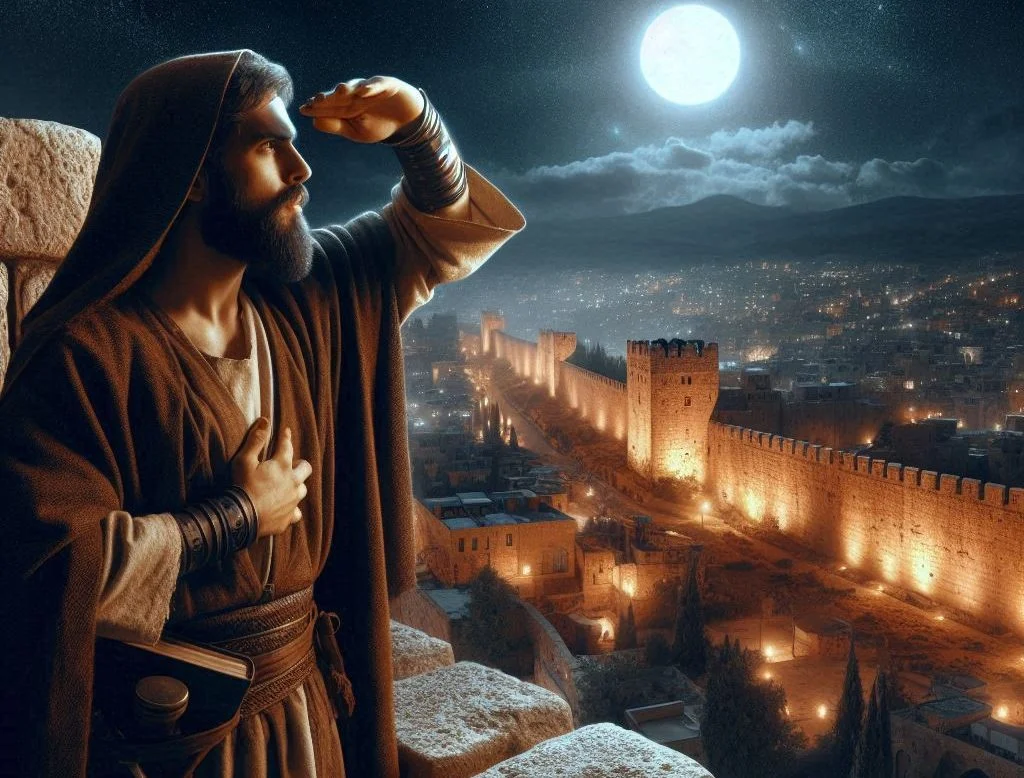
How long, O Jehovah?

Woe to the Watchtower Society!
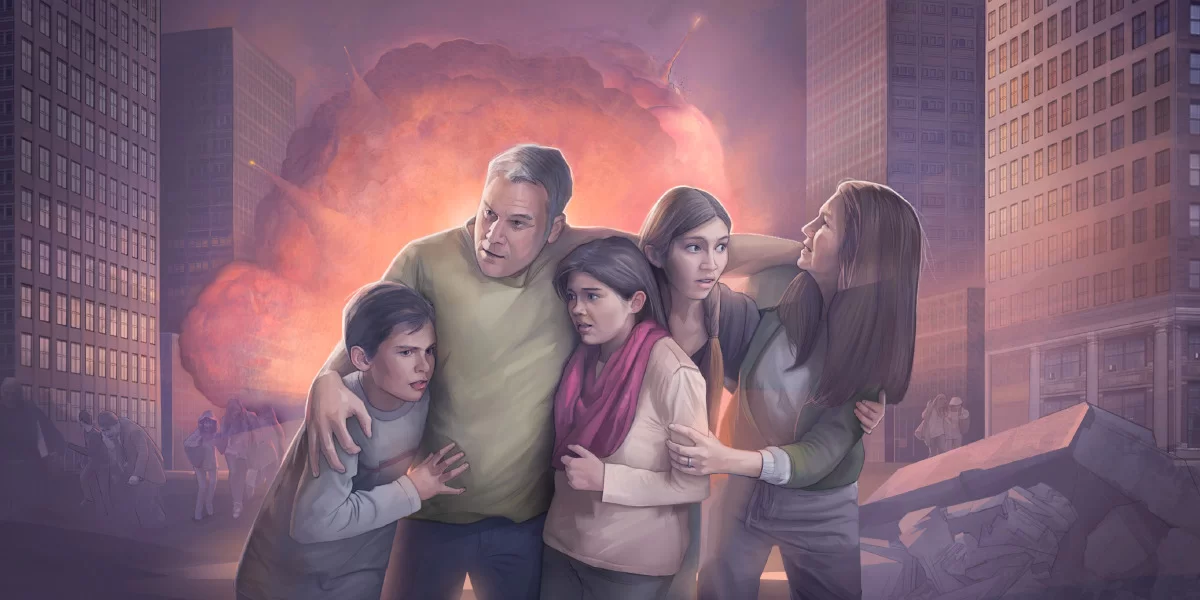
After the Watchtower
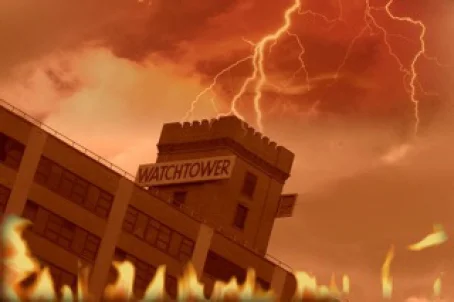
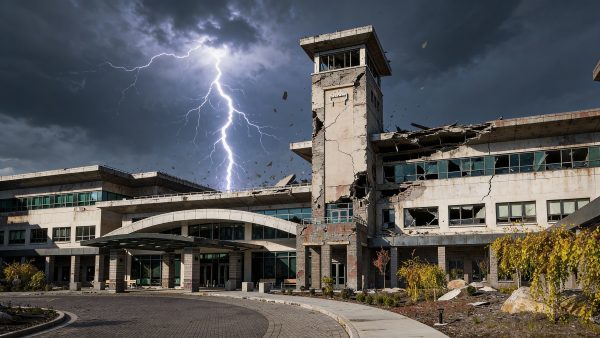
Collapse of the Watchtower
Share this chapter
SIDE NOTES
The Watchtower’s 1914 doctrine is the cornerstone of the organization. Over the ensuing years and decades, it has been reworked, adjusted, and buttressed to cover glaring contradictions.
The prophecy in the 13th chapter of Ezekiel likens it to a whitewashed wall that requires constant maintenance to keep up appearances. But the wall is destined to fall with a resounding thud. In a similar analogy, the 30th chapter of Isaiah confirms this outcome, describing a bulging, highly raised wall ready to topple.
What will cause the wall to fall? War, famine, and pestilence—in short, all of the things foretold in prophecy that have been attributed to 1914.
The Second Coming of Jesus Christ may be the most anticipated event in the history of the world and, paradoxically, the most misunderstood. While Jehovah’s Witnesses do not use the term “the second coming,” in his letter to the Hebrews, the apostle Paul used a similar expression, saying: “The second time that he appears.” In so doing, the apostle was comparing and contrasting certain features of Christ’s first and second appearances in the world. And as discussed in chapter five, a second appearance of Christ would seem to suggest a visible rather than an invisible parousia.
Because of their false expectations, the much-anticipated first appearance of the Messiah became a stumbling block to the Jewish nation as a whole. According to the common belief, the Messiah was expected to restore the throne of David to Jerusalem and cast off the hated Roman occupation. That this was the general expectation of Israel is evidenced by the question the disciples put to Jesus following his resurrection: “Lord, are you restoring the kingdom to Israel at this time?”
It was inconceivable to the Jews that the Messiah would not become an integral part of the Jewish establishment. They were God’s people and had been for nearly two thousand years! And there most certainly was no provision in the Jewish messianic doctrine for Christ to appear a second time! It was inevitable that the proud Jewish leaders would reject Jesus.
But when the Romans obliterated Jerusalem and its temple in 70 C.E., the Jewish system of worship came to an abrupt and bloody end, and with it, any possibility that a future messiah would be forthcoming from among the Hebrew nation. From Jehovah’s standpoint, the Jewish system had served its purpose. It had produced the promised Messiah as God had intended, and then that system of worship was brought to an emphatic conclusion.
In writing to the Hebrew Christians, it appears that Paul’s intention was to prepare them for the coming end of the Jewish system of things. For example, in reference to Jerusalem, Paul wrote in Hebrews 13:12-14: “Therefore, Jesus also suffered outside the city gate in order to sanctify the people with his own blood. Let us, then, go to him outside the camp, bearing the reproach he bore, for we do not have here a city that remains, but we are earnestly seeking the one to come.”
In saying that Jesus was “outside the city gate,” Paul was making reference to the fact that Christ was literally executed outside the walls of Jerusalem; and in saying he is “outside the camp,” the apostle was drawing a comparison to the animal sacrifices performed in the tabernacle—the remains of which were disposed as refuse “outside the camp.” But in making that analogy, the apostle was saying that Jesus was outside the Jewish religious institution centered in Jerusalem.
And because first-century Christians were anticipating Christ’s imminent arrival, it seems likely that they also expected Jesus to return to the physical city of Jerusalem. No doubt that is why Paul reminded the Hebrew Christians that they did not have in Jerusalem “a city that remains.”
Because both Jesus and Paul used the expression “the conclusion of the systems of things” in connection with the end of Jerusalem as the center of the worship of Jehovah, it is evident that the pattern in the first century has special importance for those Christians who would be living “the second time that he appears.”
In the 12th chapter of Hebrews, Paul reminds Christians of the awesome power that was displayed when Jehovah revealed himself to the Israelite nation that had gathered at the foot of Mount Sinai. When Jehovah spoke to Moses on the summit, the whole mountain trembled and was enveloped in a fearsome display of fire and smoke. As if to dispel any notion that the phenomenon was a natural volcanic occurrence, deafening trumpets blared from the invisible. Paul next explains the significance of that event by quoting from the prophet Haggai. He wrote: “At that time his voice shook the earth, but now he has promised: ‘Yet once more I will shake not only the earth but also the heaven.’ Now the expression ‘yet once more’ indicates the removal of the things that are shaken, things that have been made, in order that the things not shaken may remain. Therefore, seeing that we are to receive a Kingdom that cannot be shaken…” – Hebrews 12:26-28a
Originally, “the things being shaken” proved to be the entire Jewish religious system, with its holy city, temple, and priesthood being shaken completely out of existence. Yet the prophecy of Haggai, from which the apostle directly quoted, foretells that Jehovah is going to “rock all the nations,” not just Jerusalem. That being the case, it is evident that the prophecies call for the entire wicked system of things to be rocked into oblivion when Christ appears for the second time. That would include what, up until then, had served as the earthly center of the worship of Jehovah, as Jerusalem had originally. Manifestly, the only thing that will remain standing when the smoke has dissipated will be the Kingdom of God and the children with faith in God’s unshakable Kingdom.
SETTLING THE ISSUES RAISED IN EDEN
Tragically, the human race has been alienated from God since the time that Adam and Eve rebelled against Jehovah and were evicted from the paradise of pleasure known as the Garden of Eden. The trusting relationship that Adam briefly enjoyed with his Creator was ruined, both for himself and his then-unborn offspring.
As a hint of the close friendship that once existed between God and man, Genesis reveals that there was a time—back when the world was new—when the presence of God was manifested in some way as if he were leisurely strolling about in the Garden of Eden during the breezy part of the day—casually conversing with his earthly son, Adam. Since that fleeting moment of perfect harmony between God and the first man, the subsequent annals of history outside the gates of Eden are a mere chronicle of the evils due to the alienation of man from God.
But Jehovah has been like a determined and long-suffering parent with a problem child. In his vast wisdom, though, Jehovah knows that the only way that mankind will be finally disabused of its foolishness and actually come to appreciate the benefits of fully trusting and obeying God is if we are made to suffer the painful consequences for our prideful folly and lack of faith.
As Jehovah’s Witnesses know, central to God’s purpose to redeem mankind is the establishment of Christ’s Kingdom. Associated with Jesus in his heavenly Kingdom are to be 144,000 chosen ones from among mankind, who will eventually be invited to approach Jehovah’s very residence in heaven—the true holy mountain and city of God. But what purpose will they serve? Surely Jehovah and Jesus do not need their help as associate kings. Indeed, why does God invite anyone from the realms below to inhabit the heavenly sphere?
Back in Eden, the original serpent had implied that God was withholding something good from Adam and Eve. “Is it really so?” the slithering cherub impugned. Later on in Job’s day, Satan insidiously insinuated that God was guilty of inducing his servants to obey him through mere bribery. To his everlasting praise, Jehovah’s answer to the slanderous accusations has gone far beyond what any angel or human could have reasonably expected. Not only would Jehovah provide the means to legally ransom and restore mankind to paradise—proving he had the best interests of man at heart from the start—in his grand magnanimity, Jehovah also purposed to select some from among mankind and exalt them to heaven itself.
But God’s graciousness even extends beyond merely recreating some humans into spirit creatures. Jehovah purposes to grant these special chosen ones to have life in themselves. That is something that no human can possibly possess, since earthly creatures, by nature, are dependent upon outside forces to sustain life. And although the angels are a superior form of life, not even they possess life in themselves. Having life in oneself means being immortal. Immortal beings are no longer even dependent upon Jehovah for sustenance. Immortality means possessing life as a deathless, incorruptible, and indestructible being. Immortality is existence in its own right. Immortality is having life as the very Almighty Jehovah God himself possesses!
Thus, Jehovah not only willingly exalts mere human creatures into his very presence—some individuals from even the dregs of degraded human society, but he also purposes that they should become exactly like himself in nature—glorious, deathless, divine beings. And that is the very thing that Satan implied that Jehovah was supposedly unwilling to give up, when he said: “For God knows that in the very day you eat from it, your eyes will be opened and you will be like God, knowing good and bad.”
According to the Devil, God did not trust his own creation. And since the first humans and the Accuser were obviously not trustworthy, who could really argue otherwise? But contrary to the Devil’s presumptuous accusations, Jehovah has seen fit to lovingly bestow the incomprehensible gift of becoming exactly like himself upon Christ and select sons of Adam. In all likelihood, the Accuser had no comprehension of the dimensions of Jehovah’s love for his creation. Thus, with the accomplishment of his eternal purpose in a marvelous and masterful way, Jehovah will have established himself as the “God of gods.” Not only has he proven himself more powerful and infinitely wiser, but Jehovah has also been delighted to demonstrate his moral superiority and divinity over both his human and demonic detractors.
In the face of the wonderful way that Jehovah has responded to Satan’s challenge, as if to assuage his own humiliation and diminish God’s glorious purpose, down through the ages, the Devil has vigorously peddled the preposterous lie that humans have an inherent immortal soul. He has also promoted the blatantly false religious doctrine that all “good” people go to heaven when they die, as if that privilege was somehow mankind’s birthright and not dependent on Jehovah’s limited choosing and undeserved kindness. Clearly, the Devil intends to devalue God’s special gift before the world by making it seem mundane.
The truth is, though, Jehovah does not grant anyone an everlasting heavenly residence with himself, much less immortality, unless they first prove they have unbreakable faith and loyalty. And in order to create within his chosen ones an indomitable faith, they must first endure Jehovah’s displeasure and his tempered discipline; for even as the scripture says, our Lord learned obedience from the things he was made to suffer.
That is why the apostle exhorted the Hebrews to endure his disciplining—no matter how severe. In Hebrews 12:8-10, Paul wrote: “But if you have not all shared in receiving this discipline, you are really illegitimate children, and not sons. Furthermore, our human fathers used to discipline us, and we gave them respect. Should we not more readily submit ourselves to the Father of our spiritual life and live? For they disciplined us for a short time according to what seemed good to them, but he does so for our benefit so that we may partake of his holiness.”
A few verses down in that same 12th chapter, Paul partially quotes from Isaiah, where he said: “Therefore, strengthen the hands that hang down and the feeble knees, and keep making straight paths for your feet, so that what is lame may not be put out of joint but, rather, may be healed.”
The 35th chapter of Isaiah—the source of Paul’s quotation—is God’s loving exhortation to Israel after the nation had endured a most severe punishment. It is evident, therefore, that, by inspiration, the apostle Paul is really exhorting Christians who would live at the conclusion of the entire system of things, since that is when Jehovah will rock the heavens and the earth and severely discipline those whom he calls his sons. That will mark the occasion when “the Israel of God” will finally come to stand before the awesome heavenly Mount Zion.
Having more closely considered how Jehovah has purposed to permanently settle the challenge to his universal sovereignty, consider, now, the ultimate culmination of his work.
“YOUR GRAND INSTRUCTOR WILL NO LONGER HIDE”
As the Originator and rightful Ruler of the universe, God is uniquely qualified to instruct his creation. However, it may also suit God’s purpose to remain in the background and to hide himself for a time, simply allowing events to unfold—even as God himself states, when he poses the question at Isaiah 57:11—“Have I not kept silent and withdrawn?”
According to the context of the 30th chapter of Isaiah, it is during the distressing events immediately preceding the end of the world when Jehovah ultimately reveals himself as the Grand Instructor and Savior of those who trust him. That is why Isaiah 30:20 says: “Though Jehovah will give you bread in the form of distress and water in the form of oppression, your Grand Instructor will no longer hide himself, and you will see your Grand Instructor with your own eyes.”
The context indicates that Jehovah unveils himself as the Grand Instructor of his people during the judgment. Hence, we read at Isaiah 30:18: “But Jehovah is waiting patiently to show you favor, and he will rise up to show you mercy. For Jehovah is a God of justice. Happy are all those keeping in expectation of him.”
But if God has already fully revealed himself as the Grand Instructor back in 1919, as the Watchtower intimates, what purpose could possibly be served by his servants remaining in expectation of being shown favor and receiving further life-giving instruction? The truth of the matter is, Jehovah’s people must yet be fed the bread of distress and drink the bitter waters of oppression, and it is in that lowly circumstance in which God’s people will soon find themselves when Jehovah will reveal himself as the Grand Instructor.
In view of the foregoing, Isaiah 30:21 must also have a future fulfillment. That verse reads: “And your own ears will hear a word behind you saying, ‘This is the way. Walk in it,’ in case you should go to the right or in case you should go to the left.”
Now, consider the following question: If Jehovah is leading and his people are presumably following him, and yet they hear his voice as if emanating from behind them, is this not symbolism intended to indicate that God’s people have gone astray at the point when their Grand Instructor speaks to them as though from behind—as if beckoning them to turn around? Not according to the Watchtower. Here is what their Isaiah commentary states:
“Today, when faithful worshipers read the Bible, it is as if God’s fatherly voice is telling them the way to go and urging them to readjust their course of conduct so as to walk in it. Each Christian should listen carefully as Jehovah speaks through the pages of the Bible and through Bible-based publications provided by “the faithful and discreet slave.”
But aside from the Watchtower’s erroneous, self-serving interpretations, it should be apparent that God’s ultimate, eye-opening instruction does not come “through Bible-based publications” of the Watchtower. The great irony is that Bethel’s stubborn refusal to acknowledge its own need for God’s corrective counsel would appear to be the reason our Grand Instructor will find it necessary to call out to his people, instructing them to turn around, to repent, so as to walk without deviation in a new path.
“WOE TO THE STUBBORN SONS”
At Isaiah 30:1, Jehovah addresses the Israelites as “stubborn sons,” saying to them: “‘Woe to the stubborn sons,’ declares Jehovah, ‘Who carry out plans that are not mine, who make alliances, but not by my spirit, in order to add sin to sin. They go down to Egypt without consulting me, to take shelter under Pharaoh’s protection and to take refuge in the shadow of Egypt!”
It is worth noting that Isaiah 30:1 is not the only place in Isaiah where God pronounces “woe” upon his people. In fact, every chapter of Isaiah, beginning with the 28th chapter through the 31st, begins the same way. For example, Isaiah 28:1 says: “Woe to the eminent crown of the drunkards of Ephraim…” Isaiah 29:1 likewise reads: “Woe to Ariel, to Ariel…” Isaiah 31:1 says: “Woe to those going down to Egypt…but who…have not searched for Jehovah himself.”
Jehovah’s sons have access to their Father’s counsel, but to their shame, they stubbornly refuse to rely upon God’s wisdom and spirit. Instead, they merely make a pretense of doing so, while trusting in their own powers and human schemes.
As the context indicates, this development has far-reaching implications beyond ancient Israel. But can Jehovah’s modern witnesses today truly be likened to those stubborn sons of Israel who brought woe upon themselves?
Sadly, yes. The leadership of Jehovah’s Witnesses is similarly disposed to carry out their own plans—meaning that Christians may put up an appearance of obeying God, but their sacrifices may not necessarily be in accord with God’s will.
Certainly, the Watchtower’s compromising partnership with the United Nations was an unholy alliance. And their continual denial of it merely adds sin to sin, as Isaiah states.
Just as the Israelites looked to Egypt for security, apparently, lawyers representing the Watchtower have also cut questionable backroom deals with various political agencies besides the UN in order to advance the Watchtower’s interests in certain countries. For example, in the late 1990s, the Watchtower was denied legal recognition by the Bulgarian government because, among other things, the authorities felt the Watchtower coerced its members into refusing blood transfusions by hanging over them the threat of sanctions from the congregation. The Watchtower appealed the Bulgarian decision to the European Commission on Human Rights. In 1998, the lawyers struck a compromise. The Bulgarian government would grant the Watchtower legal recognition, and Jehovah’s Witnesses would be given conscientious objector status. And in return, the Watchtower would agree not to bring sanctions against Bulgarian witnesses who took blood transfusions. Of course, the leadership of the Watchtower made no mention of this compromise to Jehovah’s Witnesses.
More recently, Geoffrey Jackson, a member of the Governing Body, stated in a sworn deposition before a Royal Commission in Australia that the reason Jehovah’s Witnesses had not reported one single crime of the over 1,000 known criminal acts committed against children in the congregations is that there was no law requiring it. Jackson claimed that the Bible bound Christian elders not to overstep their bounds in such matters. But if a law required them to set aside any scriptural injunctions, then it would ‘solve their dilemma,’ as he worded it.
Such willingness to bargain with the Devil in vital matters of faith indicates that the spiritual leaders and spokesmen for Jehovah’s Witnesses do indeed fit the profile described in prophecy as being those who carry out their own plans without consulting Jehovah. Woe indeed for the stubborn sons who refuse to make an accounting and repent of their hypocrisy and treachery!
Although it may seem like a trifling matter, Jesus said that the person (or institution) unfaithful in what is least is also unfaithful in the big things. That being the case, in view of the fact that there exists a disposition towards compromise for the sake of protecting the Watchtower’s corporate interests, how might the leadership of the Watchtower react when faced with the extinction of the organization in the future?
The fanciful belief among Jehovah’s Witnesses is that God will protect his so-called “visible organization” from all calamities. That is because many of the prophecies have been misapplied, so that it is simply inconceivable in the minds of Jehovah’s Witnesses that the organization could possibly become the object of Jehovah’s wrath. For example, contributing to that mindset, the Watchtower applies the following verse to itself: “Look! I myself created the craftsman, who blows on the charcoal fire, and his work produces a weapon. I myself also created the destructive man to bring ruin. No weapon formed against you will have any success, and you will condemn any tongue that rises up against you in the judgment.” (Isaiah 54:16-17)
However, this portion of Isaiah—although written well over a century before the Chaldeans destroyed Jerusalem—is actually a projection of God’s voice to his people living in exile in Babylon, assuring them of his blessing and that Jerusalem would be rebuilt and ultimately fulfill God’s grand purpose in connection with it.
But the obvious fact remains that the weapon God used against the wayward Jews did, in fact, have “success.” Nothing could prevent Jerusalem from being destroyed once God had decreed it. In that respect, Jerusalem typifies that which is called Jehovah’s earthly organization today.
The context of the 54th chapter of Isaiah has to do with God comforting his covenanted organization in the aftermath of the destruction of Jerusalem: “O afflicted woman, storm-tossed, uncomforted, I am laying your stones with hard mortar and your foundation with sapphires. I will make your battlements of rubies, your gates of sparkling stones, and all your boundaries of precious stones. And all your sons will be taught by Jehovah, and the peace of your sons will be abundant.”
Although the physical city of Jerusalem was rebuilt, the prophecy clearly speaks to greater spiritual realities in relation to the heavenly city of New Jerusalem. That is evident in the 21st chapter of Revelation, which depicts the New Jerusalem with similar symbolism. It is that symbolic city, the very Kingdom of heaven, which will never be destroyed.
Unquestionably, the leadership of the Watchtower is proving that they are like the stubborn sons, in that they support themselves upon inaccurate interpretations of prophecy. Like the ancient Jewish establishment that tried to silence Jehovah’s prophets, the Watchtower is also disposed to scoff at any suggestion that God’s judgments might apply to Jehovah’s Witnesses instead of Christendom.
That is why the prophet speaks for Jehovah to the stubborn sons, saying: “For they are a rebellious people, deceitful sons, sons who are unwilling to hear the law of Jehovah. They say to the seers, ‘Do not see,’ and to the visionaries, ‘Do not tell us truthful visions. Tell us flattering things; envision deceptive illusions.” — Isaiah 30:9-10
While virtually every Hebrew prophet straightforwardly foretells how “Israel” will be brought into judgment with God, the Watchtower has deviously deflected all negative aspects of those prophetic visions to Christendom or applied them to the relatively insignificant events that befell the International Bible Students during the First World War. Or, they simply ignore certain sections of the Bible altogether. “deceitful sons,” indeed!
The Watchtower has steadfastly refused to hear the law of Jehovah in this regard. The “seers” are those who “see” the correct understanding of the prophetic visions that Jehovah originally gave to the biblical visionaries, seers, and prophets.
But there is no place for any modern seer of things among Jehovah’s Witnesses today. Just as the Jews were unreceptive to the edicts of Heaven, the leadership of the organization is also unwilling to accept God’s counsel as contained in Scripture. They prefer to hear “flattering things” extolling the virtues of the faithful slave and the success of the worldwide publishing work. They only allow “deceptive illusions” to exist within the theocratic arrangement — what Paul called a “deluding influence.”
In this respect, the Watchtower’s preferred prophetic interpretations have been erected like an impenetrable, protective wall—presumed to be solidly fixed. How wrong they are!
“A BULGING HIGH WALL READY TO FALL”
The 30th chapter of Isaiah expresses Jehovah’s intention to knock down the “bulging high wall” of error the organization has built up. Jehovah says: “Since you reject this word and you trust in fraud and deceit and you rely on these, so this error will be for you like a broken wall, like a bulging high wall ready to fall. It will crash suddenly, in an instant. It will be broken like a large potter’s jar, so completely smashed that no fragment among its pieces will be left to rake the fire from the fireplace or to scoop water from a puddle.”
But does Isaiah’s prophecy really apply to the Watchtower?
Consider another related prophecy in the 13th chapter of Ezekiel. Just as successive chapters in Isaiah pronounce woe upon God’s nation and people, Ezekiel 13:3 announces: “Woe to the stupid prophets, who follow their own spirit, when they have seen nothing!”
Who are those whom Ezekiel is commanded to denounce? Jehovah goes on to say of the “stupid prophets”: “They have seen false visions and foretold a lie, those who are saying, ‘The word of Jehovah is,’ when Jehovah himself has not sent them, and they have waited for their word to come true. Is it not a false vision that you have seen and a lie that you have foretold when you say, ‘The word of Jehovah is,’ when I have not said anything?’”
In considering the Christian parallel of the prophecy, who else other than the Watchtower Bible and Tract Society speaks authoritatively in the name of Jehovah? As all of Jehovah’s Witnesses know, the Watchtower claims to be the earthly mouthpiece of God. Accordingly, the organization claims that its prophetic interpretations are the authentic utterances of Jehovah. Especially is that the case when it comes to the scores of prophecies that the Watchtower has tied to 1914. It is as if for more than a century the prophets of Bethel “have waited for their word to come true”—but in vain. Instead of vindicating their 1914 vision, the passage of time only reveals more cracks in the wall.
In view of the fact that most of the Watchtower’s interpretations of prophecy are in error —as has been irrefutably established in the pages of this publication —from Jehovah’s standpoint, all such dogma amounts to “false visions.” And because the “prophets” use the organization’s authority and claim to speak in the name of Jehovah, as if they have directly derived their esoteric knowledge from a divine source, it is as though such visionaries are promoting a lying divination. (Note: For whatever reason, the 2015 NWT dropped the word “divination” and simply translates it as “lie.” However, other translations use the word “divination.” Byington uses the expression: “soothsay falsehoods.”)
But, the question remains: Does this really apply to those who are actually God’s people or merely those who falsely claim to be such?
Ezekiel 13:9-10 provides the answer: “My hand is against the prophets whose visions are false and who foretell a lie. They will not be among the people with whom I confide; nor will they be written in the registry of the house of Israel; nor will they return to the land of Israel; and you will have to know that I am the Sovereign Lord Jehovah. All of this is because they have led my people astray by saying, “There is peace!” when there is no peace. When a flimsy partition wall is built, they are plastering it with whitewash.”
The prophecy clearly states that the “stupid prophets” have led the people belonging to God astray. Naturally, the Watchtower teaches that the condemned false visionaries typify the clergy of Christendom. But if Jehovah’s Witnesses are the true people of God, how is it that the supposed “stupid prophets” of Christendom have the power and influence to lead God’s people astray?
The prophets against whom Jehovah is speaking are the most prominent men in the organization. They are responsible for misleading Jehovah’s Witnesses by means of false and lying visions. It is the very teachings of the Watchtower that continually tickles the ears of Jehovah’s Witnesses, assuring them, ‘there is peace, all is well in spiritual paradise.’
Undeniably, the Watchtower has gone to great lengths to convince Jehovah’s Witnesses that Jehovah became king in 1914 —applying nearly every prophecy in the Bible to that date —thus, blinding trusting Christians to the reality of a future presence of Christ.
The flimsy, whitewashed wall analogy is apt. Bethel has constructed an elaborate, extensive wall-like structure of biblical prophecy that primarily serves to fortify the Watchtower Society’s place as Jehovah’s organization. The organization’s very logo —a towering stone and mortar watch tower —is an ironic manifestation of the metaphorical.
As if to demonstrate their unwavering commitment to maintaining the wall, in the run-up to 2014 Bethel published an article celebrating 100 Years of Kingdom Rule as well as a book entitled: God’s Kingdom Rules and even a video reenactment of the “historic” moment when C.T. Russell announced that the Gentile times had ended. This publishing blitz was undoubtedly undertaken to reinforce the 1914 lie in the minds of Jehovah’s Witnesses.
By such vain efforts to support a lie, it is as if the Watchtower’s promoters keep plastering coat after coat of whitewash on the “wall” of their own making. Regardless of their efforts, when Jehovah actually does assert his kingship and judge his people, the Watchtower’s whitewashed prophetic wall is sure to be toppled and pulverized. As Isaiah stated, “it will crash suddenly, in an instant” —meaning, it will not be dismantled piecemeal, over time. No, once the true Apocalypse commences the Watchtower’s theocratic wall will violently collapse.
Jehovah, in fact, commands his true prophet to tell the “stupid prophets” beforehand that their whitewashed wall is doomed to fall. Ezekiel 13:11-16 reads: “Tell those plastering with whitewash that it will fall. A torrential downpour will come, hailstones will fall, and powerful windstorms will break it down. And when the wall falls you will be asked, ‘Where is your coating of plaster?’ Therefore this is what the Sovereign Lord Jehovah says: ‘I will cause powerful windstorms to burst forth in my wrath, and a torrential downpour in my anger, and hailstones in destructive fury. I will tear down the wall that you plastered with whitewash and bring it down to the earth, and its foundation will be exposed. When the city falls, you will perish within her; and you will have to know that I am Jehovah. When I fully unleash my wrath upon the wall and upon those who plastered it with whitewash, I will say to you: ‘The wall is no more, and those plastering it are no more. The prophets of Israel are gone, those who prophesy to Jerusalem and who see visions of peace for her, when there is no peace,’ declares the Sovereign Lord Jehovah.”
(Note: With the release of the first edition of this publication in 2005, each member of the Governing Body was sent a copy along with the open letter entitled: The Wall Must Fall!)
That the above prophecy of Ezekiel applies to Christ’s congregation during the “second time that he appears” is evident from a parallel prophecy in the 28th chapter of Isaiah. The significance of Isaiah’s prophecy is that God uses the very same analogy of a tempest-driven, flooding downpour that washes away the falsehoods and delusions that the bragging rulers have imposed upon God’s people.
Isaiah 28:14-16 reads: “‘So hear the word of Jehovah, you boasters, you rulers of this people in Jerusalem, For you men say: ‘We have made a covenant with Death, and with the Grave we have made an agreement. When the raging flash flood passes through, it will not reach us, for we have made a lie our refuge and we have hidden ourselves in falsehood.’ Therefore this is what the Sovereign Lord Jehovah says: ‘Here I am laying as a foundation in Zion a tested stone, the precious cornerstone of a sure foundation. No one exercising faith will panic.’”
In proof that the prophecy has not been fulfilled yet, Isaiah 28:16 situates the actual establishment of Christ’s Kingdom as coinciding with the tempest and flooding downpour of Jehovah’s denunciation. Clearly, the prophecy reveals that Jehovah lays the foundational stone in Zion—an obvious reference to Christ’s Kingdom —concurrent with “the raging flash flood.” Those who imagine they have a working agreement with Death and the Grave are those who trust solely in their place within the Organization. To their horror, that seeming place of refuge will be swept away in a flooding hailstorm of persecution.
True Christians, that is, those who know and trust Jehovah and have faith in Christ, will not panic during the turmoil that ensues. Their faith is stronger than organizational loyalty. Needless to say, the actual return of Christ will shatter the Watchtower’s 1914, invisible parousia chimera, along with the hopes of those who foolishly cling to The Lie when it is finally swept away by Jehovah’s rage.
Returning to the 30th chapter of Isaiah, the prophecy goes on to say: “By returning to me and resting, you will be saved; your strength will be in keeping calm and showing trust. But you were unwilling.” According to Jehovah’s declaration, his people are not going to trust him when the test comes. No doubt that will be because Jehovah’s Witnesses have been induced to trust in the Watchtower. The tragic result of not fully trusting God will be that “A thousand will tremble at the threat of one; at the threat of five you will flee until what is left of you is like a mast on the top of a mountain, like a signal pole on a hill.”
It is in the context of Jehovah’s proud people cowering before the tyrannical enemy that Isaiah 30:18 says: “But Jehovah is waiting patiently to show you favor, and he will rise up to show you mercy. For Jehovah is a God of justice. Happy are all those keeping in expectation of him.”
The painful lesson that all men must soon learn is that Jehovah God is the rightful Sovereign of this earth. The nightmare that is about to descend upon this world will prove beyond all doubt that humans do not have the wisdom to rule themselves.
Ultimately, Jehovah’s Witnesses must also come to know that Jehovah is God in a way we have not known before.
In the aftermath of the collapse of the organizational wall the faithful who accept the severe disciplining of the Grand Instructor will then reject all vestiges of the Society, as if an abhorrent idol. The 22nd verse foretells: “And you will defile the silver overlay of your graven images and the golden plating of your metal statues. You will cast them away like a menstrual cloth and say to them, ‘Be gone!’”
According to the apostle Paul, a lofty thing among men is a disgusting thing to Jehovah. During the judgment, Jehovah will express his own disgust, so that never again will Jehovah’s people foolishly exalt any so-called earthly organization to the lofty place now occupied by the Watchtower.
Jehovah’s chastened people will discard their organizational idol and all that has been attached to it as if it were an abhorrent thing.
At Isaiah 30:26, Jehovah indicates the magnitude and intensity of the truth that is yet to be revealed to his people by comparing it to literal light. It reads: “And the light of the full moon will become like the light of the sun; and the light of the sun will become seven times stronger, like the light of seven days, in the day that Jehovah binds up the breakdown of his people and heals the severe wound from the blow he inflicted.”
What is the setting of the occasion when the spiritual light from Jehovah will intensify sevenfold? The preceding verse of Isaiah provides the answer: “in the day of the great slaughter when the towers fall.”
That day of slaughter, when the towers fall, cannot be an insignificant event. It must relate to the coming crash of the global system; when the great steel and glass towers of Wall Street and London and all the related structures in cities throughout the world come crashing down, at least metaphorically. And no doubt, counted among the many towers destined to fall, will be the Watchtower itself!
In harmony with the way the prophecy of Daniel is written, we should not expect the identities of the king of the north and south to change so abruptly from one verse to the next—as is taught by the Watchtower.