
“Nevertheless, when the Son of man arrives, will he really find this faith on the earth?”
– Luke 18:8 –
CHAPTER MENU
Related videos, articles

Unless You People Have Faith
Learning from Jesus' 40 Days on Earth
Share this chapter
SIDE NOTES
The apostle reminded Christians that the various trials we experience can strengthen our faith. Specifically, he said: “In order that the tested quality of your faith, of much greater value than gold that perishes despite its being tested by fire, may be found a cause for praise and glory and honor at the revelation of Jesus Christ.” – I Peter 1:7
Notice that Peter connected being tested by fire with the revelation of Jesus Christ.
The Watchtower has said very little about the manifestation and revelation of Jesus Christ. It is made to appear anticlimactic and non-eventful. And of course, the parousia is completely detached from the revelation and manifestation. This is the operation of Satan. The test of fire is an immediate prelude to the visible revelation of Christ to the chosen ones. It will require faith to walk through the fire.
The three Hebrews in Babylon are a prophetic drama. They refused to worship the image of the beast and, as a result, were thrown into the fiery furnace where they met someone who looked like a son of the gods. Indeed, the angel in the furnace pictures Christ when he reveals himself.
The Israelite camp stood on the border of the Promised Land, the land flowing with milk and honey that Jehovah had promised to give to the children of Abraham. After centuries of slavery, freedom and prosperity were in sight. It was theirs for the taking. But the land God intended to give to the Israelites was not uninhabited. There were seven tribes of Canaanites living there. Naturally, the inhabitants could not be expected to simply hand over their homes, gardens, vineyards, and flocks. They would have to be conquered and expelled. But Jehovah, the God of Israel, would help drive them out, provided they had faith.
To test the Israelites’ faith, God ordered Moses to send 12 spies into the land, one man from each of the 12 tribes. For forty days, they spied out the land. When they reported back to the camp, having brought back a sample of the produce of the land—a cluster of grapes so enormous that it took two men to carry on a pole—ten of the spies disheartened the people, claiming that the men of the land were giants and their cities were heavily fortified. Israel could not conquer them.
Caleb and Joshua tried to intervene to counteract the negative report, to no avail. The people were so faithless that they wanted to turn around and go back to Egypt—back to slavery. There was even talk of stoning Moses and Aaron. Jehovah, of course, was listening and determined to exterminate the entire camp. But Moses interceded, appealing to God’s mercy and pointing out the reproach it might bring on God if He failed to deliver on His promise.
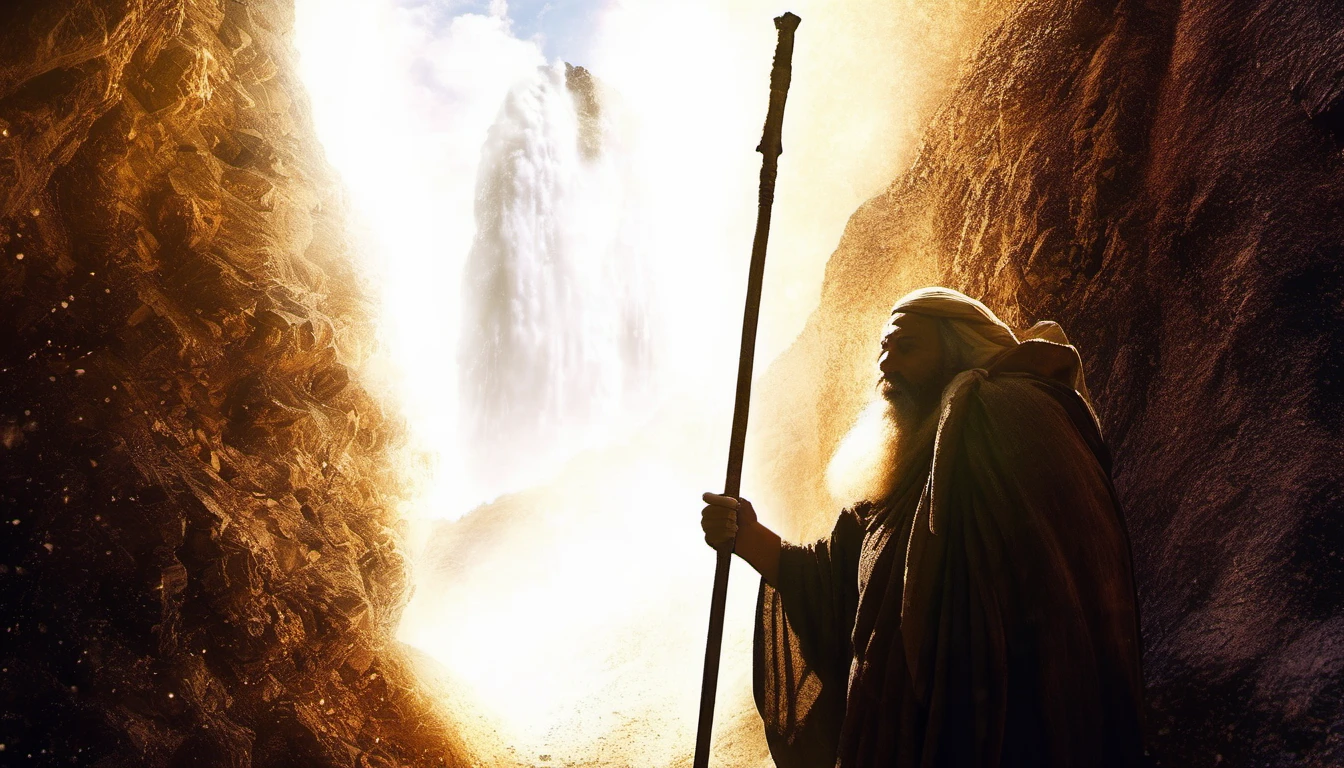
The Israelites’ lack of faith was deplorable, inexcusable. They had to be punished for their disrespect toward God. After all, they had been eyewitnesses to all of the extraordinary things God had done in delivering them from Egypt—including parting the Red Sea and drowning Pharaoh and his army of charioteers. They saw Jehovah come down on Sinai to speak with Moses, as the mountain shook and was enveloped in smoke and fire while trumpets blared from the invisible. They saw God’s presence in the camp manifest as a column of smoke by day and a pillar of fire by night. Even so, they did not have faith enough to expect God to fulfill his promise.
As a consequence of their repeatedly testing God, Jehovah forbade them from entering the land flowing with milk and honey. Everyone 20 years of age and older would die in the wilderness. And the children, whom the Israelites faithlessly said would be plundered by the Canaanites, would inherit the land.
The Psalmist makes mention of this: “When your forefathers tested me; they challenged me, though they had seen my works. For 40 years I felt a loathing toward that generation, and I said: ‘They are a people who always go astray in their hearts; they have not come to know my ways.’ So I swore in my anger: ‘They will not enter into my rest.’” – Psalms 95:9-11
In writing the letter entitled “Hebrews,” Paul alluded to this tragic incident and said that the Israelites were not allowed to enter into God’s rest due to their lack of faith. He used that tragedy as a warning to anointed Christians who might, at a critical moment of testing, display the same lack of faith.
By contrast, in the 11th chapter of Hebrews, beginning with Abel, Enoch, and Noah, Paul recounted many examples of men and women who had faith in Jehovah.
If you take the time to read over the 11th chapter, you will notice that each person either acted upon God’s direct order or they acted upon what they perceived to be the will of God. For instance, Noah was told to build an ark. And he did just so according to the specifications God provided. That took faith, since apparently, it hadn’t rained before the deluge. (See Genesis 2:5-6)
On the other hand, Rahab, a prostitute in Jericho, acted upon what she had heard by hearsay concerning what Jehovah had done to the Egyptians more than 40 years before. It is quite possible that Rahab was not even born when Jehovah wrecked Egypt and led the Hebrews out. Rahab, the Canaanite, had more faith than most of the Israelites, whose carcasses dropped in the wilderness during the 40 years of their wandering. She knew God would overthrow Jericho even though no city in Canaan had yet fallen to Joshua. She must also have had faith that Jehovah was merciful and just, and that God would recognize even someone like herself if she aided the Israelite spies. And she acted upon her faith and secured Jehovah’s blessing for herself and her family. The name of the Canaanite prostitute is even mentioned in the Christian Scriptures as an outstanding example of a person who acted in faith.
It is most noteworthy that when Jesus was on earth, some non-Israelites demonstrated more faith than even the apostles. For example, when traveling through Sidon, a Phoenician woman pleaded with Jesus to heal her daughter, who was badly tormented by demons. Jesus rebuffed her initial request, telling her he was sent only to the lost sheep of the house of Israel. But the woman persisted, approaching Jesus and bowing before him in worship. Again, though, the Lord rebuffed her, saying, “It is not right to take the bread of the children and throw it to the little dogs.” To which she responded: “Yes, Lord, but really the little dogs do eat of the crumbs falling from the table of their masters.” Then Jesus replied to her: “O woman, great is your faith; let it happen to you as you wish.” (Luke 15:21-28)
On another occasion, an army officer came to Jesus and explained that his servant was ill and close to death. Jesus responded that he would cure him when he got there, implying it would be some time, to which the officer explained that as one in charge, he gives orders that are instantly carried out, and he then said he was unfit for the Lord to come to his house, requesting that Jesus just give the word and make it happen remotely. Jesus responded: “I tell you the truth, with no one in Israel have I found so great a faith.” (Matthew 8:5-9)
On the other hand, Jesus’ apostles, who saw many miracles, often lacked faith. Jesus often addressed them as “you, with little faith.”
“DO YOU NOT YET HAVE ANY FAITH?”
On one occasion, when Christ and his apostles were all in a fishing boat crossing the sea of Galilee at night, a great storm arose, and the little boat was near being swamped. During all of the commotion, Jesus was asleep on a pillow in the stern. The terrified disciples woke the Lord and informed him of their peril, not knowing what to expect. Upon rousing himself, Christ rebuked the wind and waves and said, “Hush! Be quiet!” And a great calm set in. Jesus then said to them: “Why are you so afraid? Do you not yet have any faith?” (Mark 4:35-31) It was an appropriate question, since they had already seen Jesus expel demons, heal the sick and lame, and turn water into wine.
What is extraordinary about Paul’s list of people of faith in the 11th chapter of Hebrews is that they acted alone. Until Moses wrote the Pentateuch, there was no such thing as the Bible. Even after the Israelite nation settled in the Promised Land, God called upon individuals to perform specific tasks that ran counter to prevailing customs and attitudes or were not officially sanctioned. It required that they act upon their faith. For example, because of their having strayed from the commandments, God allowed Midian to cruelly oppress Israel. In time, though, Jehovah selected Gideon as a judge and deliverer. But first, Jehovah ordered Gideon to destroy the altar of Baal and cut down the sacred pole on his father’s property that the community worshipped. The false worshippers wanted to kill Gideon. Gideon’s faith conquered his enemies.
Then there was David. As a mere teen, David was anointed to be the next king of Israel. He became a national hero after toppling the hulking Goliath with a sling and a stone. Even so, the madened king of Israel, Saul, was determined to kill David. Think of it, the appointed head of Jehovah’s earthly organization at that time was apparently driven by jealousy to attempt to murder David. Although on two occasions David could have taken matters into his own hands and killed Saul, instead, he demonstrated his respect for Jehovah and faithfully waited for God to intervene, which he did. David conquered his enemies through his faith.
Like the Israelites, we too are at the threshold of a new world. But there will certainly be many enemies and stumbling blocks to overcome.
Although it is presently unthinkable for millions of Jehovah’s Witnesses who have been conditioned to expect the Watchtower to be there, even issuing life-saving instructions when the world falls apart, that is not going to happen. Your faith in God must be demonstrated more directly.
After all, the Watchtower has been your tutor this far. You have followed a carefully crafted program. Perhaps you were raised in the truth, as the saying goes. The Watchtower is all you know. The question, though, is how may God get to know whether you personally have faith or are just following men? Following men is easy. Seeing the One who is invisible requires faith. Attaining salvation will require more than the easy-to-follow theocratic program. Did not Jesus forewarn his apostles that Satan, the Devil, had demanded to have them to sift them as wheat? And shall we pass through the fire and not be tested?
This is why God has blinded the minds of the prophets and visionaries. You will have to accept an entirely new reality, for which your organizational tutor has not prepared you. You will have to disregard whatever voice comes as if from beyond the grave, claiming to be the faithful slave. Remember the wife of Lot, Jesus warned.
Jesus foretold that during the tumultuous conclusion, many will stumble, and brothers will hate one another, and betray one another. You will be beaten in the synagogues and hauled before the authorities. It is presently unthinkable, but Jesus prophesied that even parents will hand over their children, and children will have their parents put to death. Do you imagine this cannot happen in the Watchtower’s “spiritual paradise”? Did not Jesus say, “Heaven and earth will pass away, but my words will by no means pass away”?
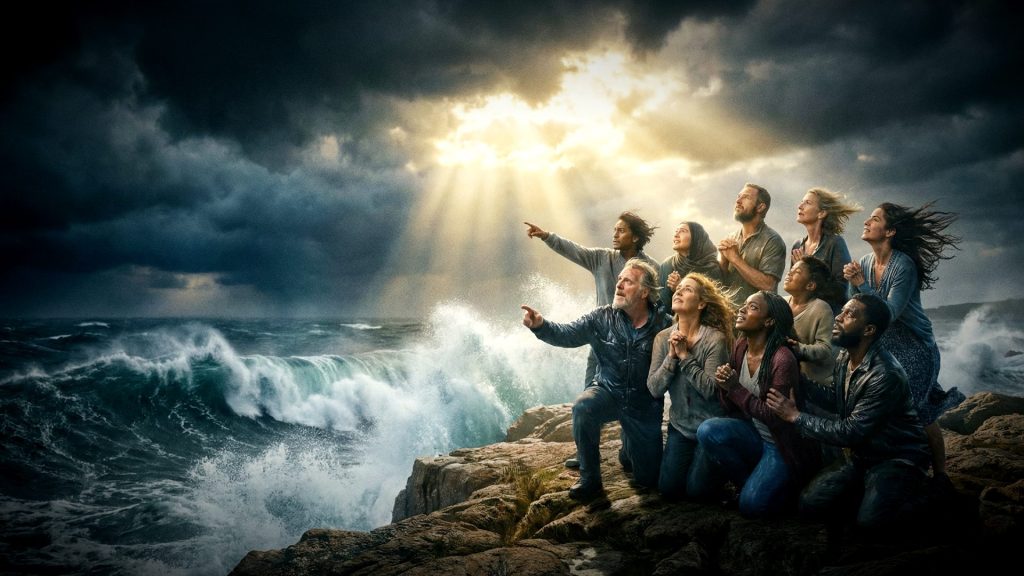
We know the literal earth will not pass away or ever be destroyed, that God created it to be inhabited, even forever. Nevertheless, it will seem as if the world is ending. The Psalmist wrote concerning this: “God is our refuge and strength, a help that is readily found in times of distress. That is why we will not fear, though the earth undergoes change, though the mountains topple into the depths of the sea, though its waters roar and foam over, though the mountains rock on account of its turbulence.” – Psalms 46:1-3
Will you continue on in faith even if those who used to take the lead fall away? Will you continue “seeing” the One who is invisible and put faith in God’s promise of life even if your false expectations are not realized? Will you trust God when the system crashes, when millions of people perish by war, famine, and pandemics? Will you have faith to plead for salvation and call upon the name of Jehovah even if doing so means punishment and even death?
That is why Jesus posed the soul-searching question when he concluded his story of the widow who persisted in entreating the unrighteous judge until she got justice, saying: “Nevertheless, when the Son of man arrives, will he really find this faith on the earth?” – Luke 18:8
Thus, the idea that there could be an ongoing conspiracy to subvert the world into an anti-God, supranational, totalitarian state is made to appear preposterous.